
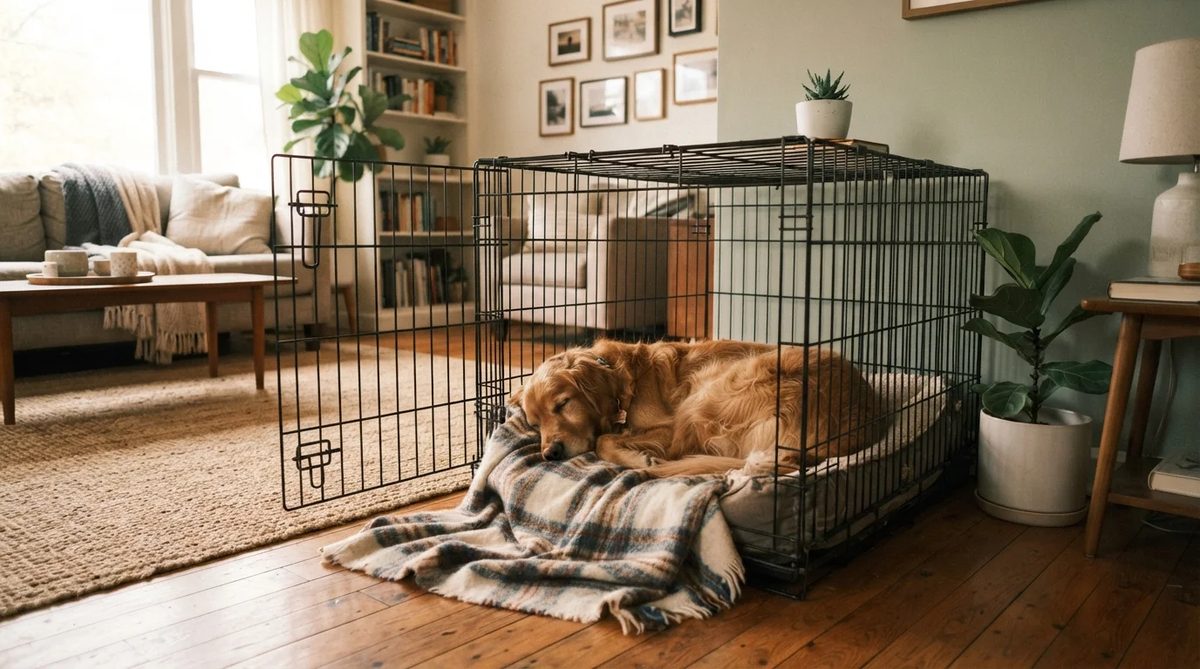
Why a crate works (when it is done right)
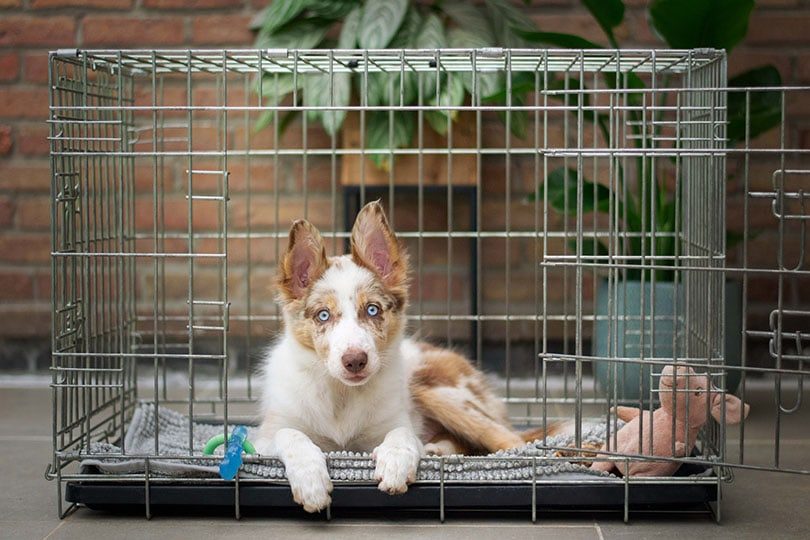
A puppy sleeping peacefully in a crate with the door open
Dogs are den animals. A covered, enclosed space feels safe to them in the same way a bedroom feels safe to us — it is theirs, it is quiet, and nothing sneaks up from behind. That instinct is what makes crate training work.
The crate also helps with toilet training, because dogs avoid soiling their sleeping area. A correctly sized crate encourages a puppy to hold it until you take them out, which is why trainers recommend crates for the first months. The key word is correctly sized — too big, and the puppy just uses one corner as a toilet.
How to measure your dog for a crate

A person measuring a dog with a tape measure
Measure your dog standing: from nose to tail base for length, and from the floor to the top of the ears for height. Add about 10 cm (4 inches) to each number. That gives a crate your dog can stand, turn, and stretch out in — without enough spare room to turn into a bathroom.
For a puppy, buy the adult size with a divider panel. The divider shrinks the space while they are small and moves as they grow, so you buy one crate instead of three. If you are unsure between two sizes, the larger one is usually the better choice — dogs would rather have a little extra room than be cramped.
Wire crates: the best all-rounder
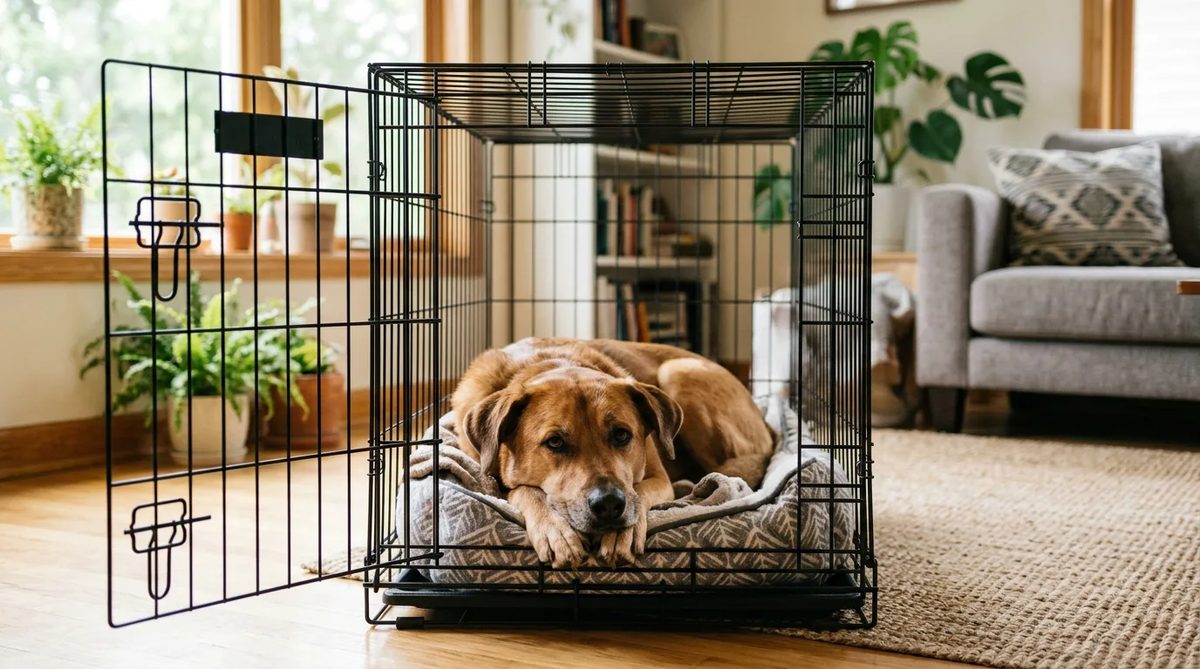
A black wire dog crate with a soft blanket inside
Wire crates are the default for a reason: they fold flat for storage, most come with a divider panel, and the open bars give good airflow and a view of the room. Many dogs settle faster when they can see their people.
The downside is that some dogs feel exposed in an open wire crate. A light blanket draped over the top and sides fixes that — it turns the crate into a den. Just leave the front uncovered and make sure the blanket cannot be pulled inside and chewed.
Plastic kennels: best for travel and nervous dogs
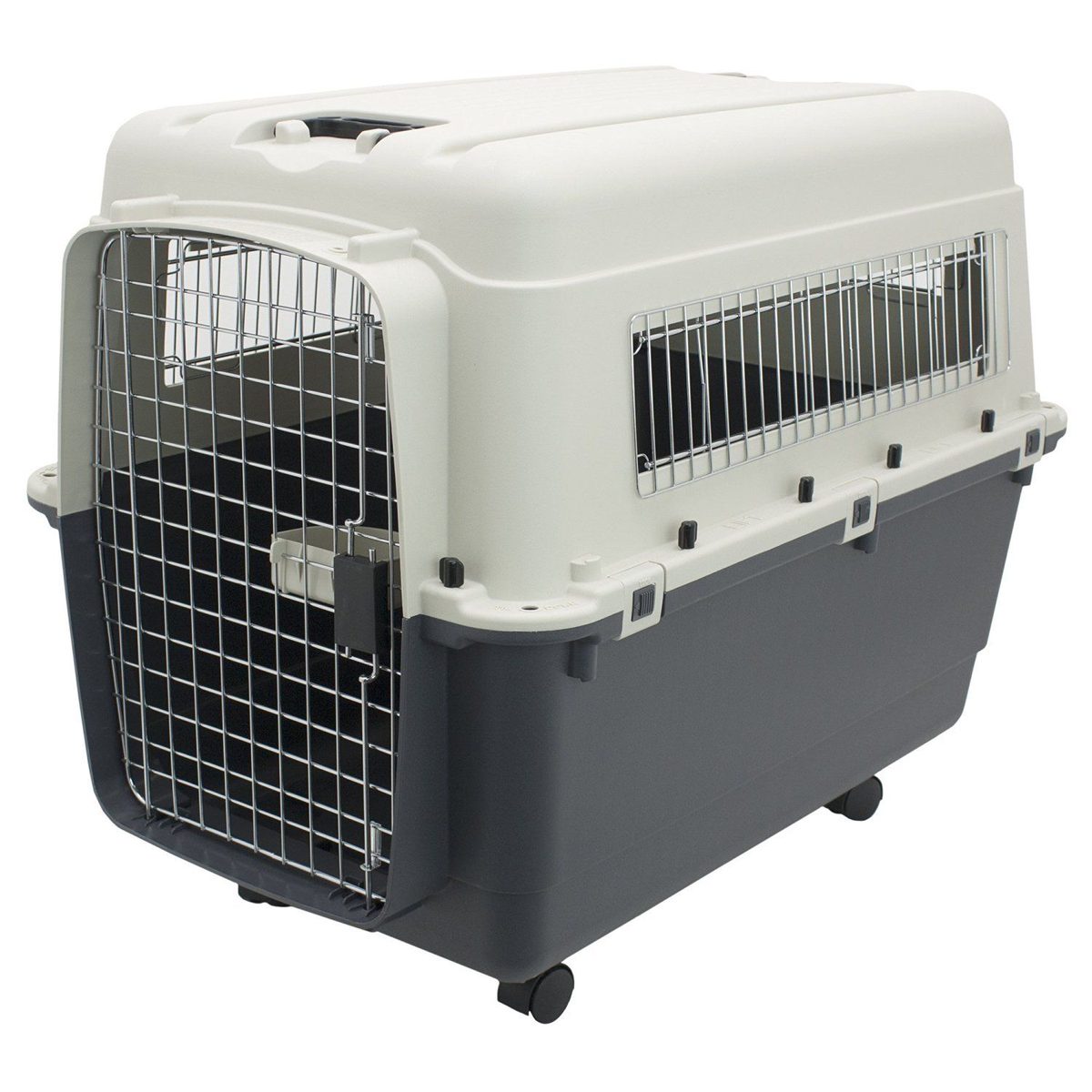
A plastic pet carrier kennel ready for travel
Plastic kennels are solid on the sides with a barred door, which makes them feel more den-like and private. They are the standard for car travel and the style most airlines accept, so one kennel can serve as a home crate and a travel crate.
They are heavier and do not fold, so they take up more space at home. Ventilation is good but not as open as wire, so they suit cooler rooms and dogs that like a darker, quieter den.
Soft-sided crates: best for small dogs and travel
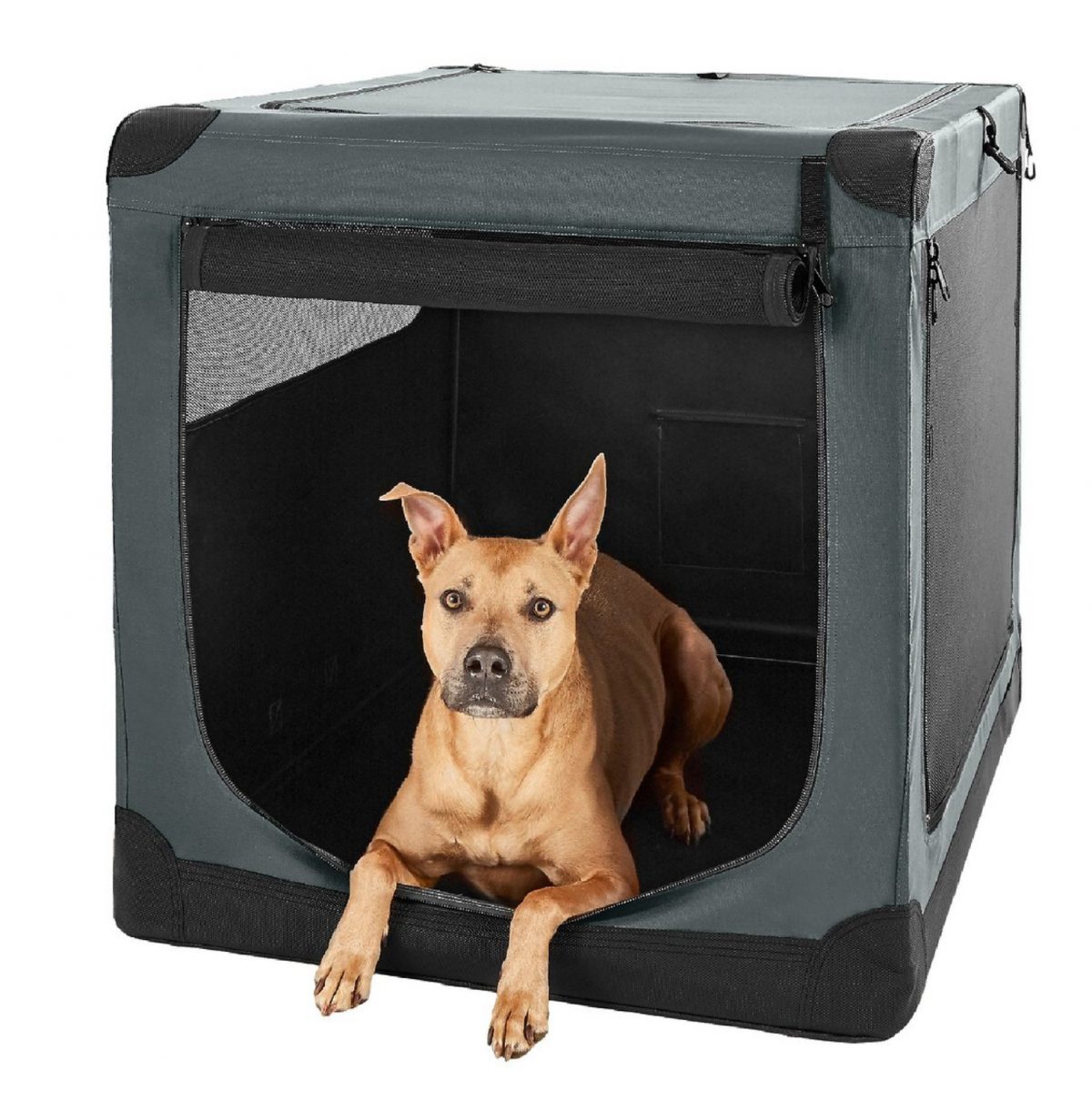
A small dog sitting in a soft fabric travel crate
Soft-sided crates are fabric over a light frame. They weigh almost nothing, fold flat, and fit under an airplane seat — the best option for small dogs and frequent travel.
They are not for chewers or escape artists: a determined dog can chew through fabric, and a strong dog can collapse the frame. Use them for dogs that already settle well in a crate, not for a puppy that is still learning.
Keep reading
Where to put the crate
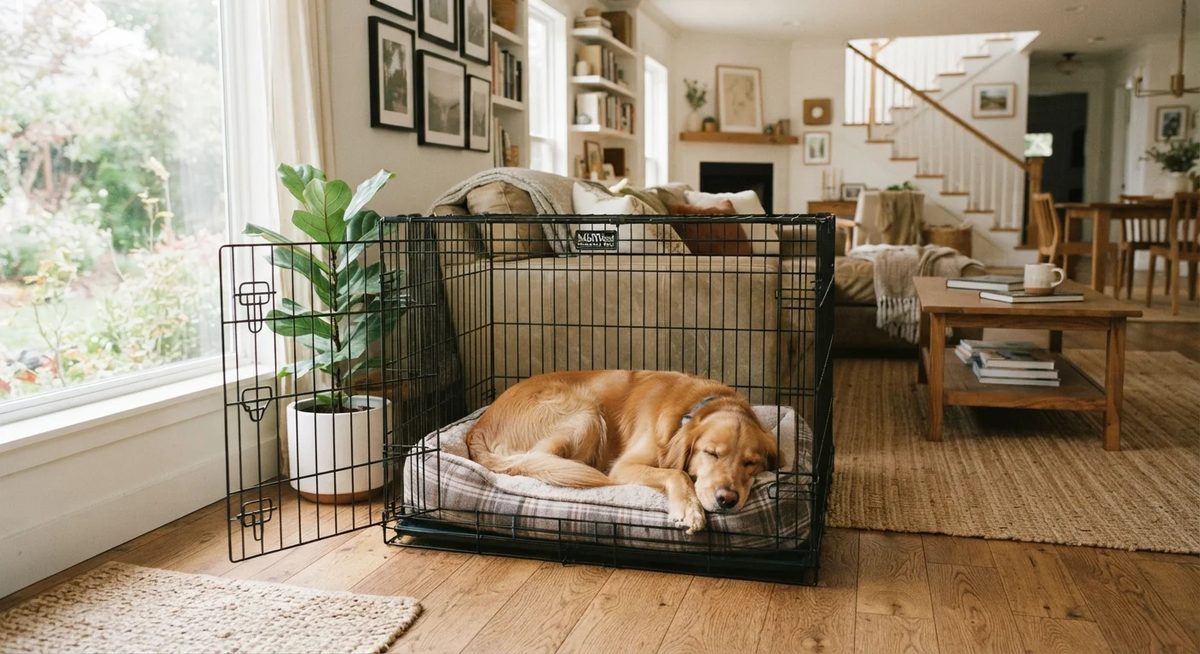
A dog crate placed in a quiet corner of a living room
Put the crate where the family spends time — the living room corner, not the garage or a spare room. Dogs are social, and a crate in a lonely spot feels like exile. At night, many owners move the crate to the bedroom for the first weeks so the puppy can hear and smell them.
Keep it out of direct sun and away from radiators, and give the dog a clear view of the room's entrance if you can. A crate facing a wall feels like a dead end; a crate facing the room feels like a lookout post.
Crate training step by step
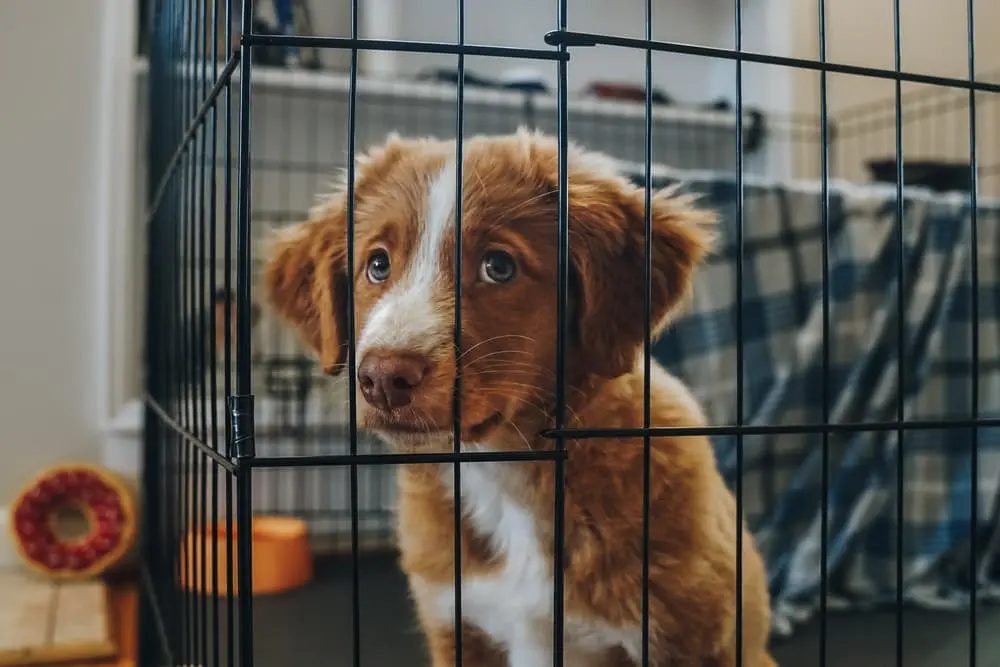
A person giving a dog a treat near its crate
Start with the door open and the crate full of good things: treats, a stuffed Kong, a blanket that smells like you. Let the dog wander in and out freely for a day or two. Feed meals inside the crate with the door open.
Then close the door for a few seconds while the dog eats, and open it before they fuss. Build up slowly — a minute, five minutes, half an hour — always letting them out while they are calm. Never use the crate as punishment, and never let a crying puppy out mid-cry if you can wait for a quiet moment first.
How long can a dog stay in a crate?
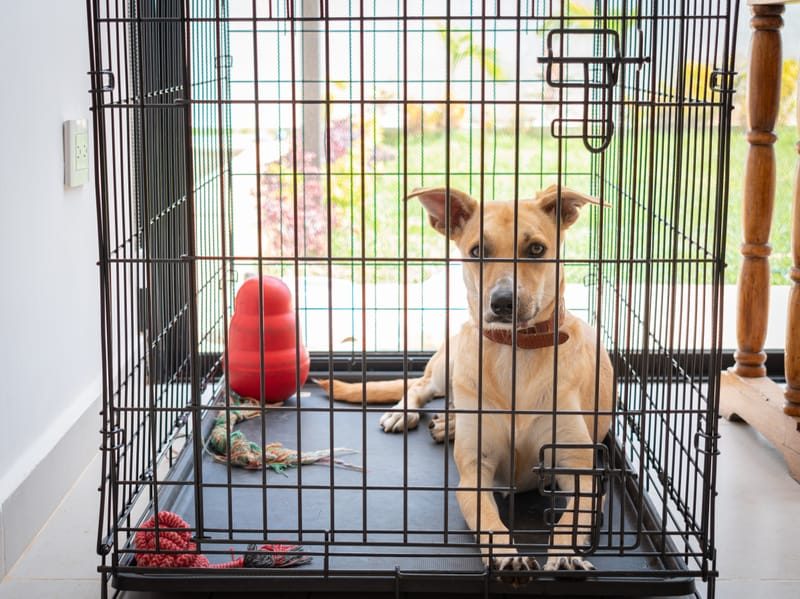
A dog stretching after a nap in its crate
A good rule for puppies is one hour per month of age, up to about four hours — a three-month-old puppy should not be crated much longer than three hours during the day. Adult dogs can manage longer, but eight hours in a crate while you work is too much for most dogs.
If your workday is long, combine the crate with a playpen, a dog walker at midday, or a pet camera so you can check in and see how your dog is coping. A dog that sleeps calmly in the crate is fine; a dog that panics needs a different plan, not a longer crate session.
Mistakes that make dogs hate their crate
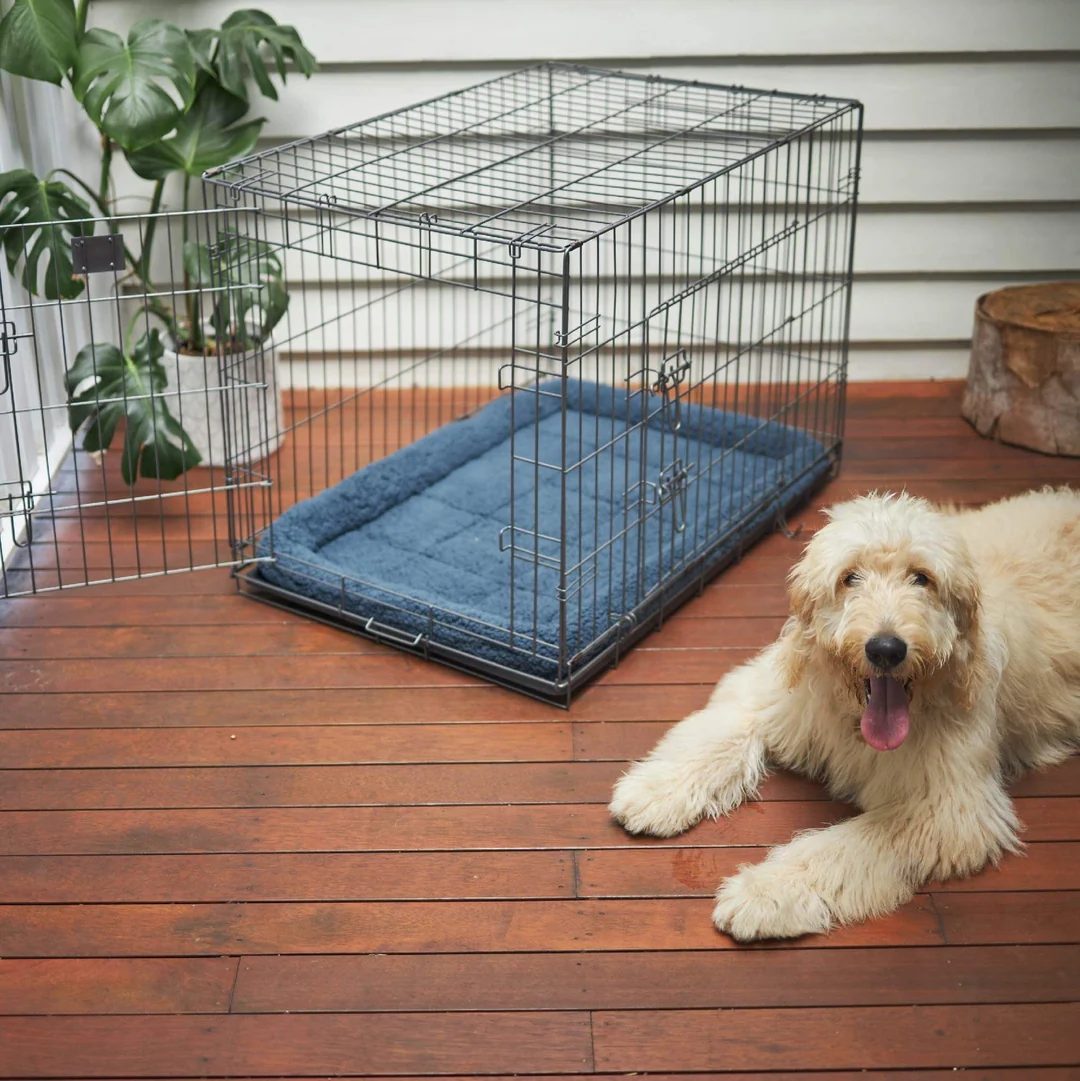
A dog relaxing on a bed beside its open crate
The three big mistakes are rushing the introduction, using the crate as punishment, and leaving the dog in too long. A fourth is buying the wrong size — too small is stressful, too big defeats the toilet-training benefit.
If your dog already dislikes the crate, start over from zero: door open, treats inside, no closing the door for a week. Patience now saves months of struggle later. And if your dog panics in a crate — drooling, chewing the bars, hurting themselves — stop and talk to your vet or a certified trainer; some dogs need a different confinement plan.