
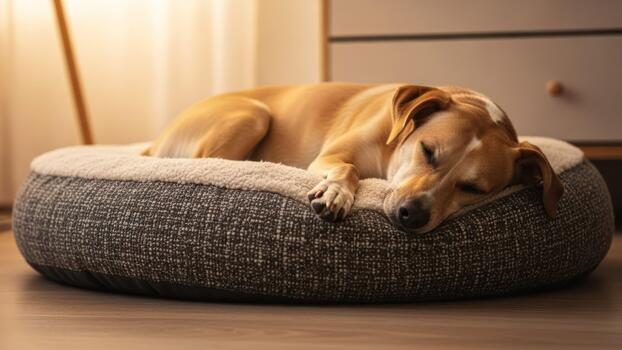
First, watch how your dog sleeps

A dog curled up in a tight ball, asleep
Before you shop, spend a few days noticing your dog's sleep positions. Dogs fall into three rough groups: curlers who tuck into a tight ball, stretchers who sprawl flat on their side, and leaners who press against a wall, sofa arm, or your leg.
Each style wants a different bed. A curler in a flat mat feels exposed; a stretcher in a donut bed runs out of room. Match the bed to the sleeper and you have solved most of the problem before you spend anything.
Donut beds for curlers
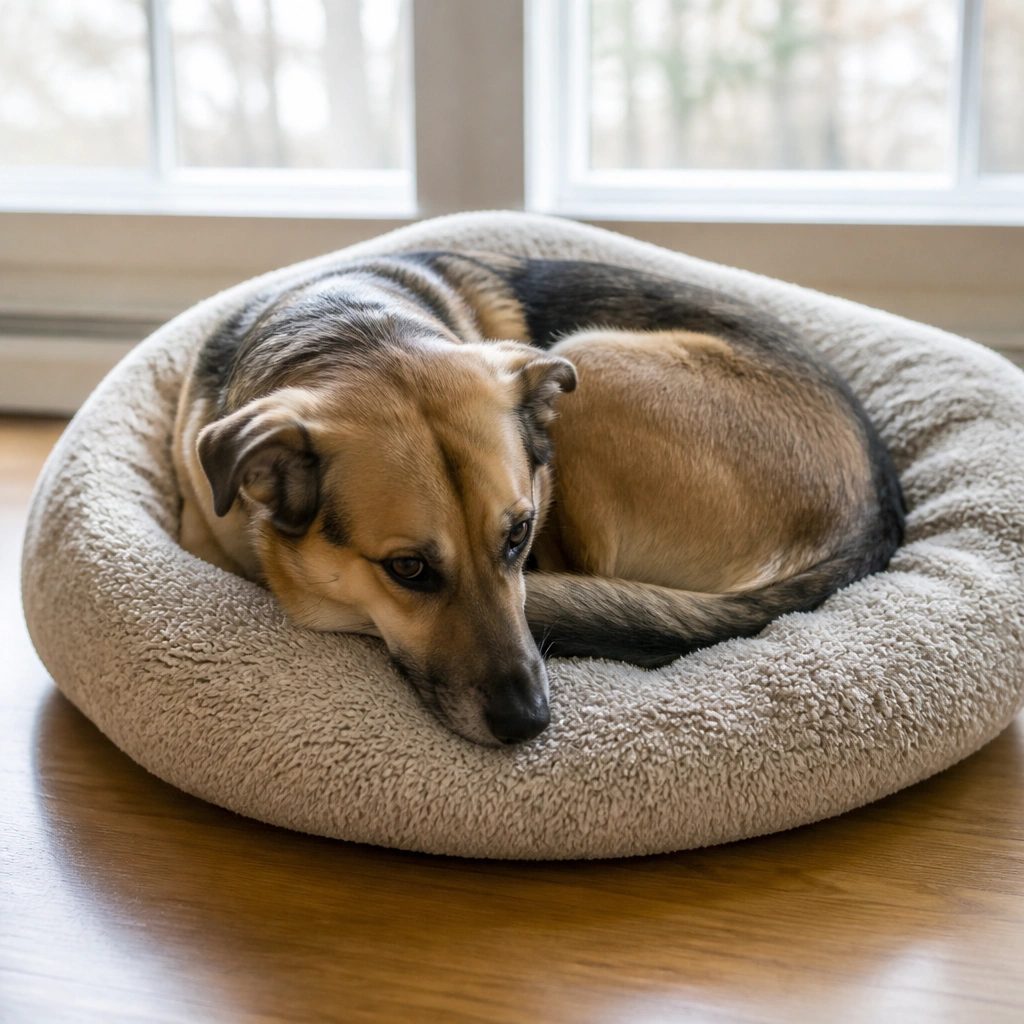
A dog curled up in a round donut bed
Donut beds are round with raised edges all around — a nest. Curlers love them because the rim supports the head and back and the enclosed shape feels secure. They are also the best choice for anxious dogs that like to burrow.
Size matters: the inside of the donut should fit your dog curled up, not stretched out. If your dog sometimes sprawls, a donut with a lower rim or a larger size gives them the option to stretch across it.
Flat mats and rectangles for stretchers
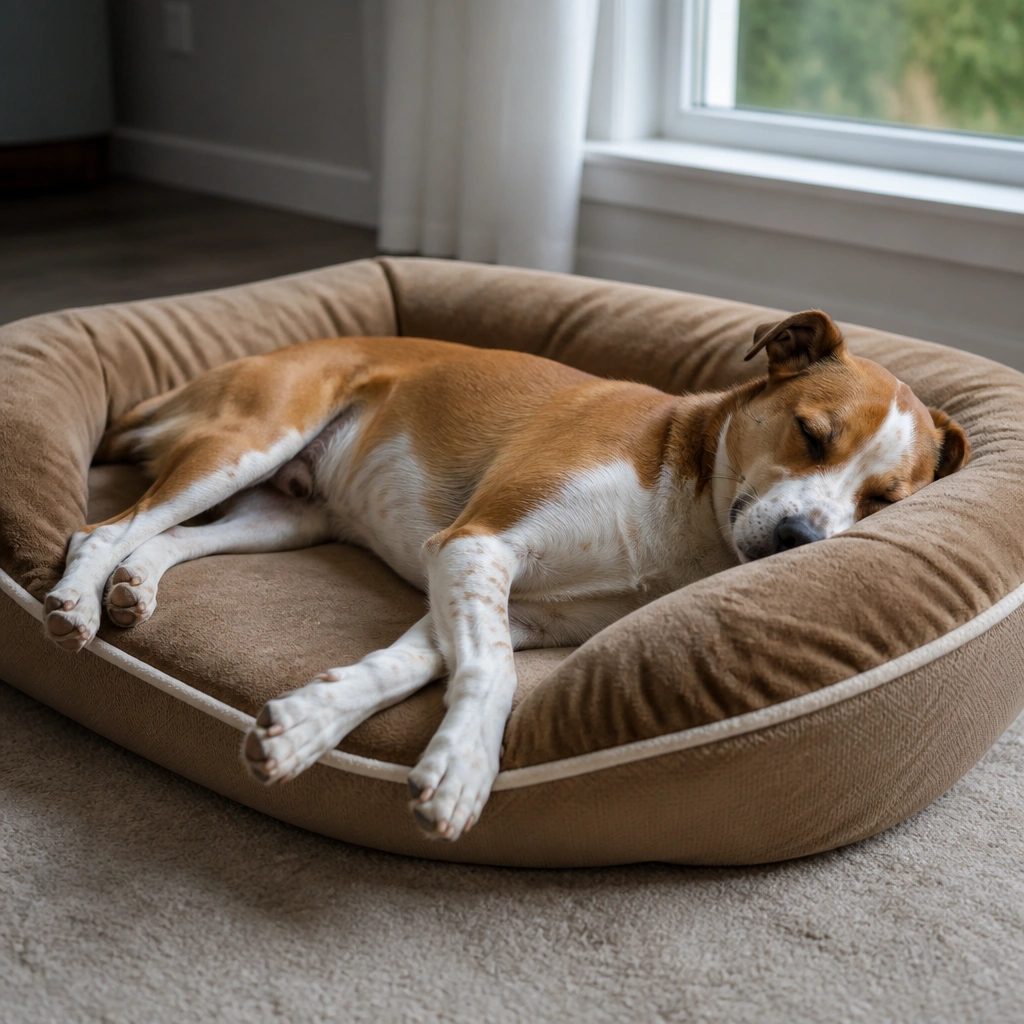
A large dog stretched out flat on a rectangular bed
Stretchers sleep on their side with legs extended, and they need length more than walls. A flat rectangular bed or a large mat gives them room to sprawl without hitting an edge.
For big dogs, measure your dog lying flat from nose to tail and add 15-20 cm (6-8 inches). A bed that is too short is the most common reason a large dog abandons it for the floor.
Bolster beds for leaners
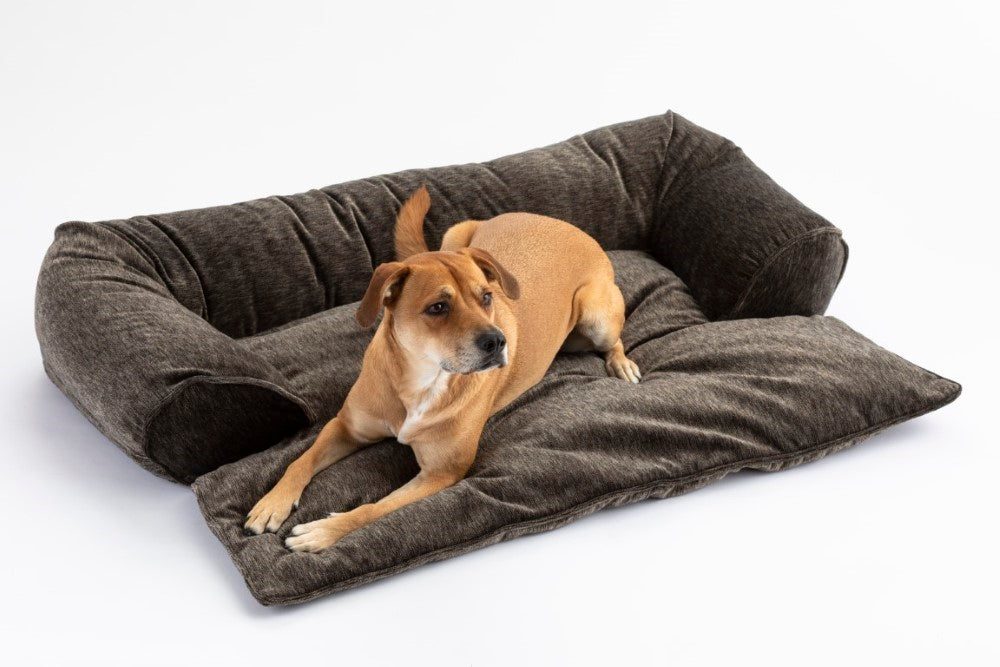
A dog resting its chin on the raised edge of a bolster bed
Bolster beds have raised edges on three or four sides — a pillow with walls. Leaners use the bolster as a chin rest, and the raised edge gives a sense of enclosure without the full nest of a donut.
Bolster beds are the best all-rounders: they suit curlers, leaners, and dogs that switch positions through the night. Look for bolsters that hold their shape — cheap ones flatten within weeks.
Orthopedic beds for older dogs

A senior dog resting on a thick memory foam bed
Older dogs and large breeds benefit from memory foam, which distributes weight and eases pressure on joints. A good orthopedic bed has a solid foam base at least 10 cm (4 inches) thick — thin 'egg-crate' foam compresses too quickly to help.
Signs your dog needs more support: slow to rise in the morning, stiff after naps, or choosing hard floors over soft beds. A dog that avoids soft beds may actually be telling you the bed is too soft to get up from — firm support, not more fluff, is the fix.
Keep reading
Materials: what survives real life
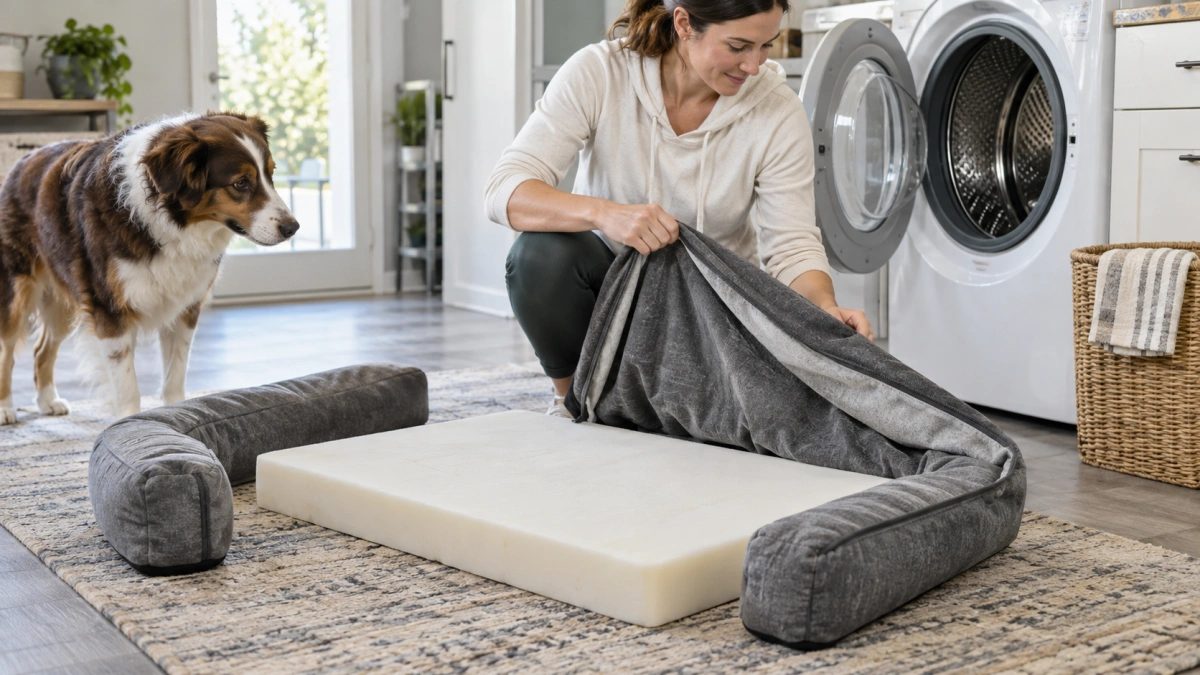
A washable pet bed cover being removed for cleaning
The best bed is the one you can wash. Look for a removable, machine-washable cover — dog beds collect hair, drool, and the occasional accident, and a bed you cannot clean becomes a bed you replace.
For chewers and puppies, choose a bed with a tough, tightly woven cover and no loose zippers or buttons to gnaw. For outdoor use, look for water-resistant fabric and a base that keeps the bed off damp ground.
Sizing: measure the dog, not the breed
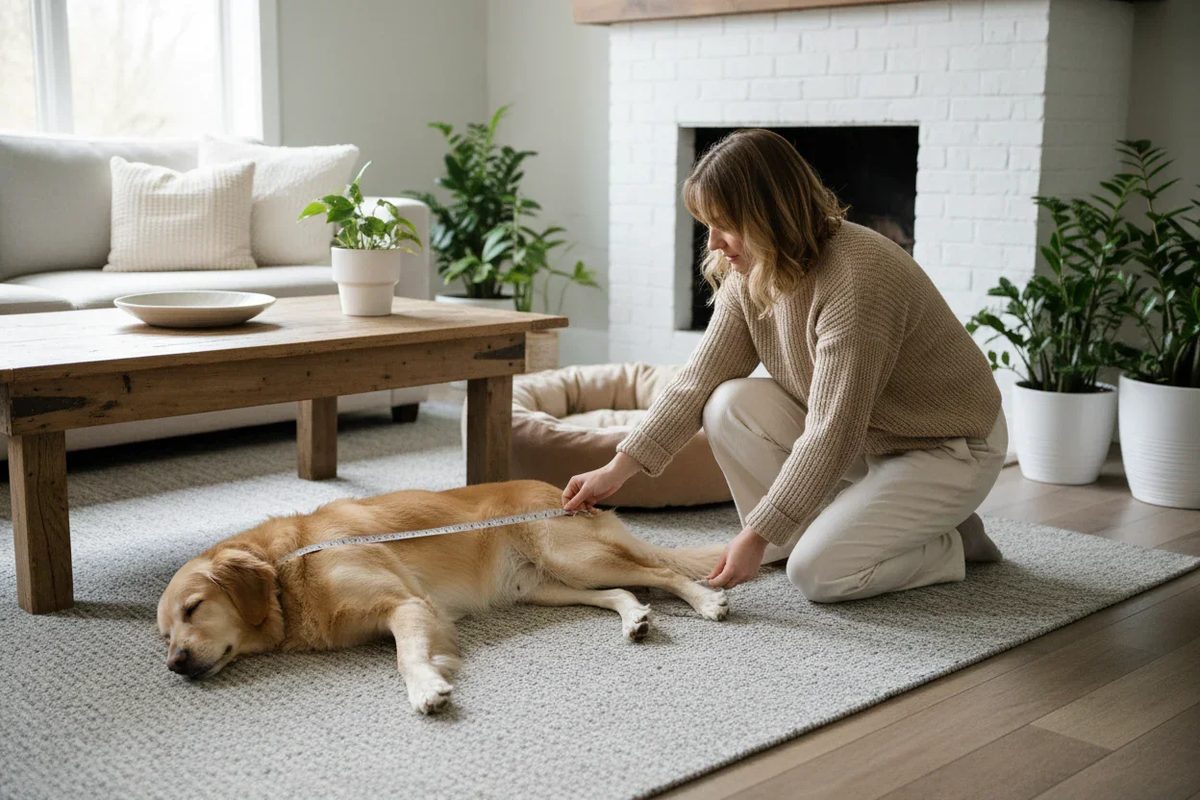
A person measuring a sleeping dog with a tape measure
Breed size charts are a rough guide at best — two Labradors can differ by 10 kg. Measure your dog in their favorite sleeping position: curled diameter for donut beds, full stretched length for flat beds.
When in doubt, size up. Dogs use extra space; they do not complain about it. A bed that is slightly too big is a bed your dog can grow into, sprawl across, and share with the cat.
Placement: put the bed where the dog already is
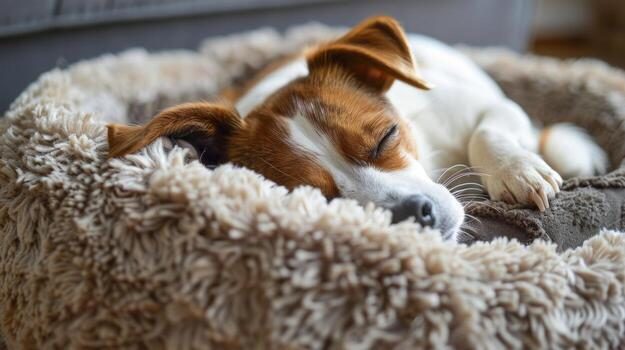
A dog bed placed beside a sofa in a living room
The number one reason dogs ignore beds is placement. A bed in the corner of a quiet room loses to the rug in the middle of the family room every time. Dogs sleep where the people are.
Put the bed where your dog already naps — beside the sofa, near your desk, by the back door. Once the bed is in the right spot, add a blanket or worn T-shirt that smells like you. Familiar scent is the fastest way to make a new bed feel like theirs.
Getting a reluctant dog to use the bed

A dog being rewarded with a treat on its new bed
If your dog still ignores the bed, train it like any new behavior: toss treats onto the bed, reward any paw that lands on it, and feed a meal or two on the bed. Keep sessions short and positive — never drag or push a dog onto a bed.
Some dogs take a week to trust a new bed, especially if it smells new. Wash the cover before first use, place it in the dog's favorite spot, and be patient. The bed that gets ignored for three days often becomes the only spot they sleep by the end of the week.