
The daily job: scooping
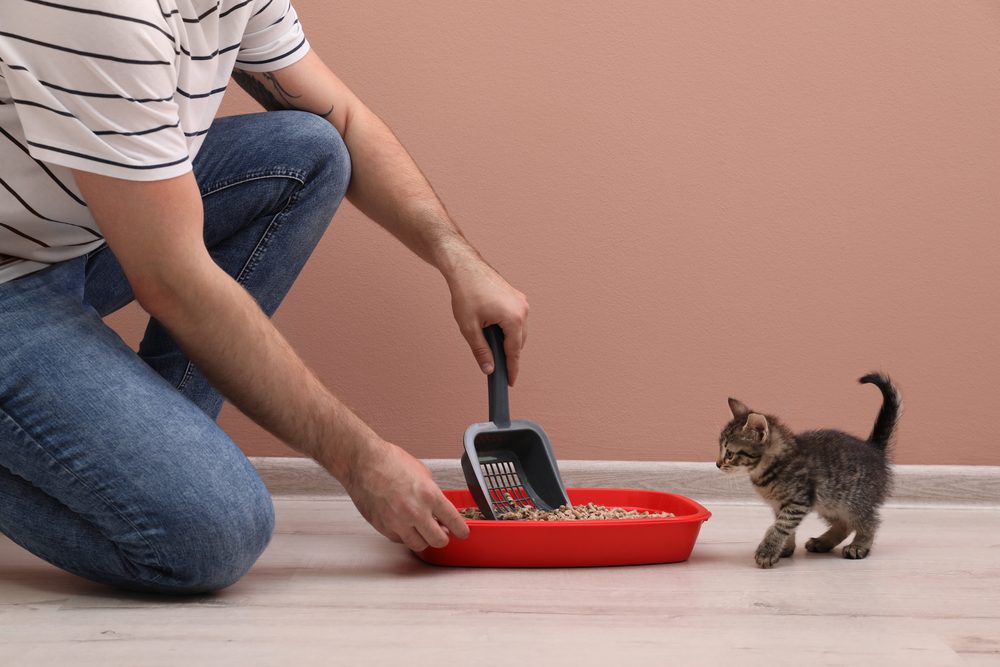
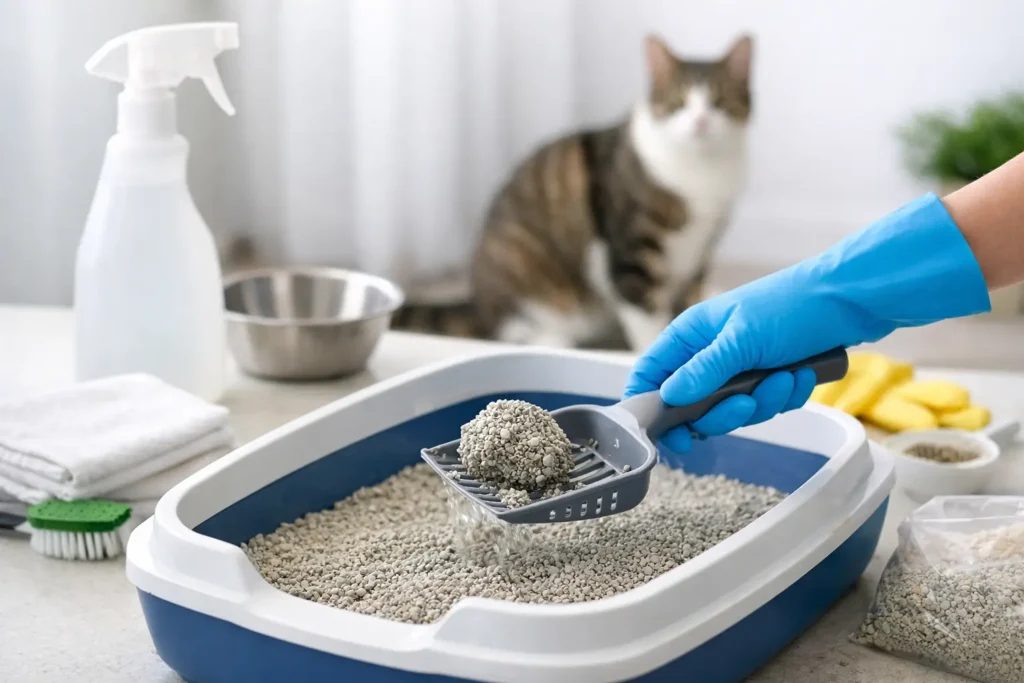
A litter scoop removing clumps from a litter box
Scoop every day, no exceptions. In a multi-cat home, scoop twice. Daily scooping removes the urine and solids before they break down and smell, and it keeps the remaining litter clean enough to last its full lifespan.
Scoop into a bag, tie it, and bin it — never flush clumping litter. A quick scoop takes under a minute and does more for odor than any litter brand. If the box smells despite daily scooping, the problem is usually the change schedule, not the scoop.
Topping up: keeping the depth right
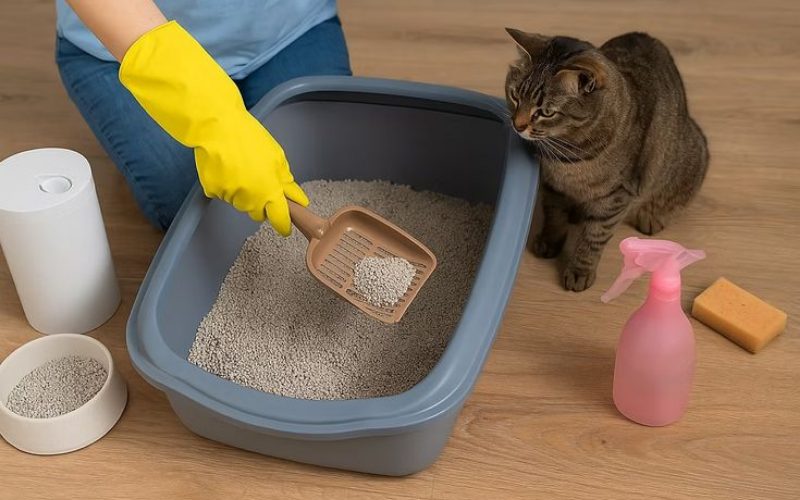
Fresh litter being poured to top up a litter box
Litter depth matters more than most owners realize. Too shallow and urine hits the bottom of the box, where it sticks and smells. Too deep and litter tracks everywhere. Aim for 7-10 cm (3-4 inches) and top up once a week or whenever scooping has lowered the level.
Top up with the same litter — mixing types changes how the litter clumps and can confuse a cat that is used to one texture underfoot. If you are switching litters, do it gradually over a week rather than all at once.
Clumping litter: full change every 2-4 weeks
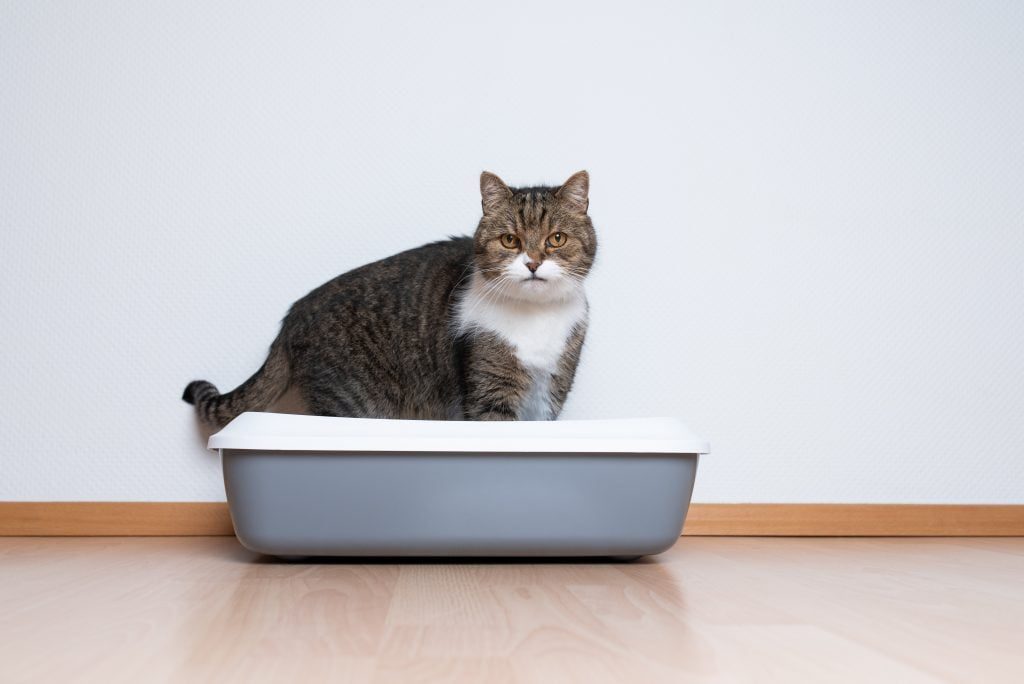
A cat using a clean litter box
Clumping clay, corn, and wood litters last two to four weeks between full changes with daily scooping. One cat at the long end, two or more cats at the short end. The litter itself tells you when it is done: clumps get softer, the box smells after scooping, and the granules look dusty or damp.
When you do the full change, empty the box completely, wash it with warm water and mild soap, dry it, and refill with fresh litter. Do not use strong cleaners or bleach — the smell can put a cat off the box entirely.
Crystal litter: about once a month
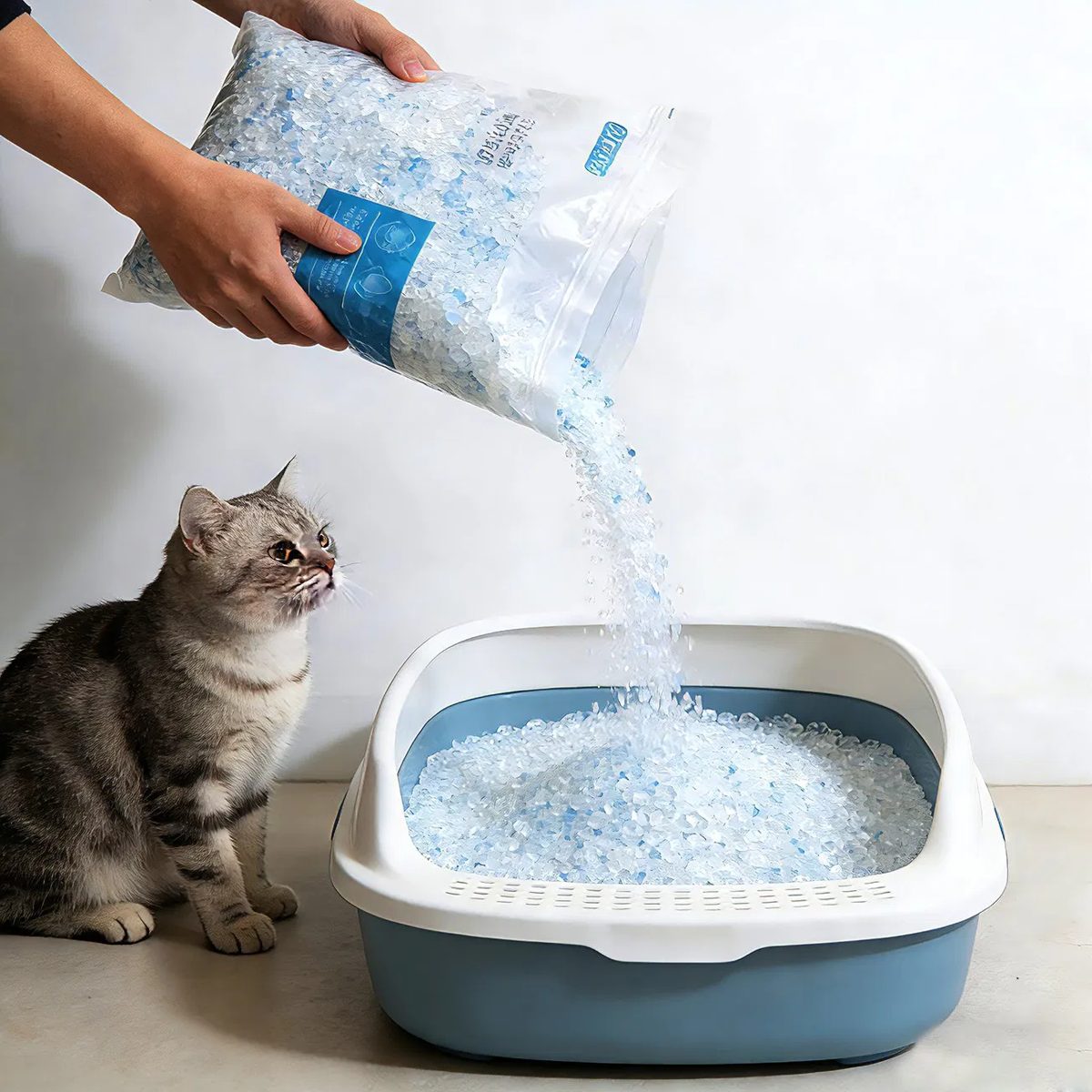
Silica crystal litter in a clean litter box
Silica crystal litter absorbs urine instead of clumping it, and one bag typically lasts about a month for a single cat. Stir the crystals daily so fresh crystals take their turn, and scoop solids as usual.
The crystals change color as they saturate — when most of the crystals have turned yellow and the box starts to smell, it is time for a full change. Multi-cat homes will need a change every two to three weeks instead of monthly.
Non-clumping litter: change weekly
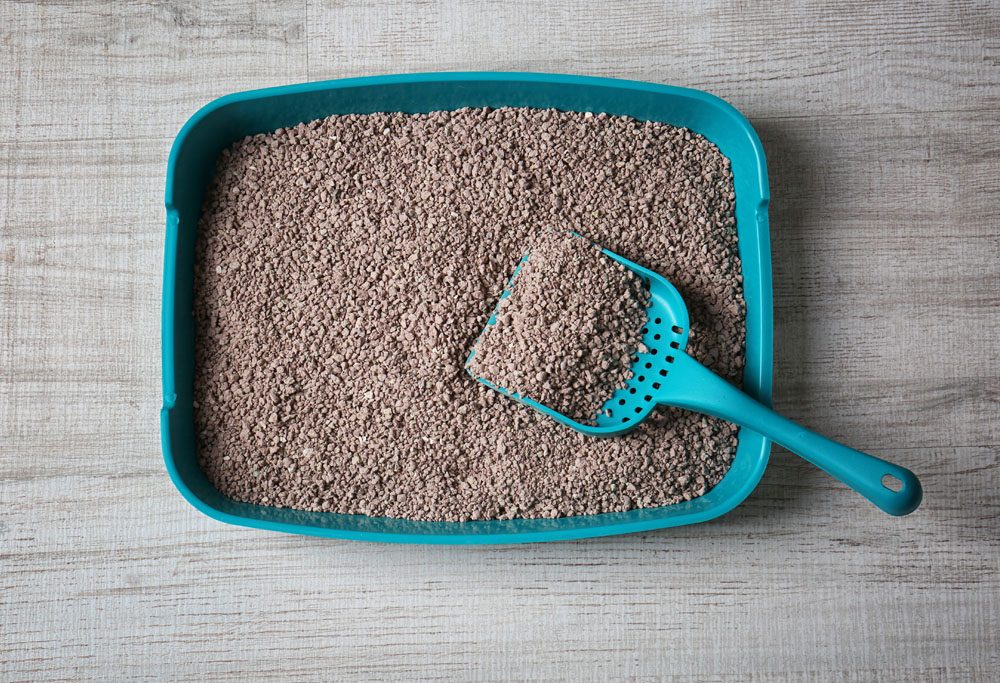
Traditional non-clumping clay litter in a box
Non-clumping clay absorbs urine into the granules but cannot be scooped out, so the whole box saturates over the week. Change it fully at least once a week, and more often in multi-cat homes.
Non-clumping litter is cheaper per bag but more expensive per month, because you use so much more of it. If you are changing weekly and still fighting odor, a clumping litter will usually work out cheaper and fresher.
Keep reading
Multi-cat homes: the honest math

Two cats sitting together in a home
The rule is one box per cat, plus one extra — and it exists because cats are territorial about toilets. Two cats sharing one box will saturate it twice as fast, and the change schedule shortens accordingly.
With two cats and three boxes, each box gets less traffic and lasts longer. With two cats and one box, you are scooping twice daily and doing full changes every week or two no matter what litter you buy. More boxes is almost always a better investment than more expensive litter.
Signs the litter change is overdue
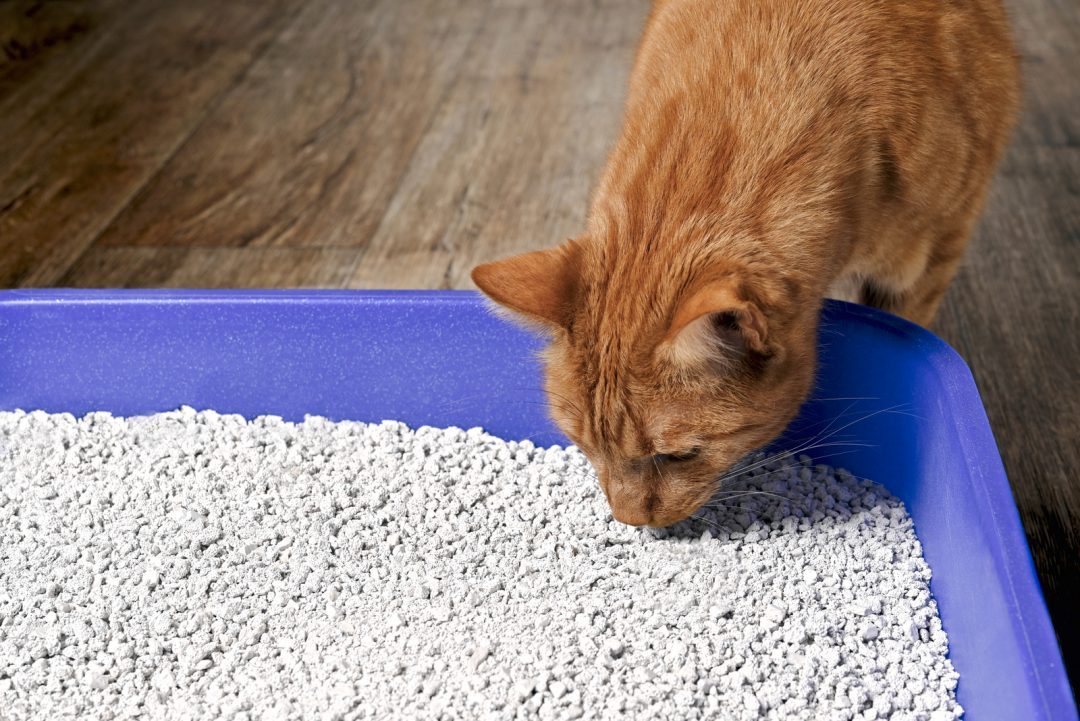
A cat sniffing at its litter box and walking away
Your cat will tell you before your nose does. The signs: the cat perches on the edge of the box instead of standing in it, digs for a long time without settling, or starts going outside the box. Those are complaints, not bad behavior.
Other signs: the box smells within an hour of scooping, clumps fall apart when you lift them, or you can see damp patches at the bottom. Any of these means a full change is overdue — empty, wash, and refill.
Cleaning the box itself
An empty litter box being washed with water
Plastic absorbs odor over time, and no amount of fresh litter fixes a box that smells. Wash the empty box with warm water and mild, unscented soap at every full change, and let it dry completely before refilling.
Replace the box itself once a year, or sooner if the plastic is scratched — scratches trap odor and bacteria that washing cannot reach. Stainless steel boxes last longer and hold less odor, though they cost more upfront.
A simple routine that works
A tidy litter area with a mat, scoop, and storage bin
Here is the routine we use in our two-cat home: scoop every morning and evening, top up on Sundays, full change every three weeks, and a box wash with every change. The whole routine takes about ten minutes a week.
Keep the scoop, bags, and spare litter next to the box so the routine is easy to stick to. The best litter schedule is the one you will actually follow — and a routine that lives next to the box is the one that survives busy weeks.